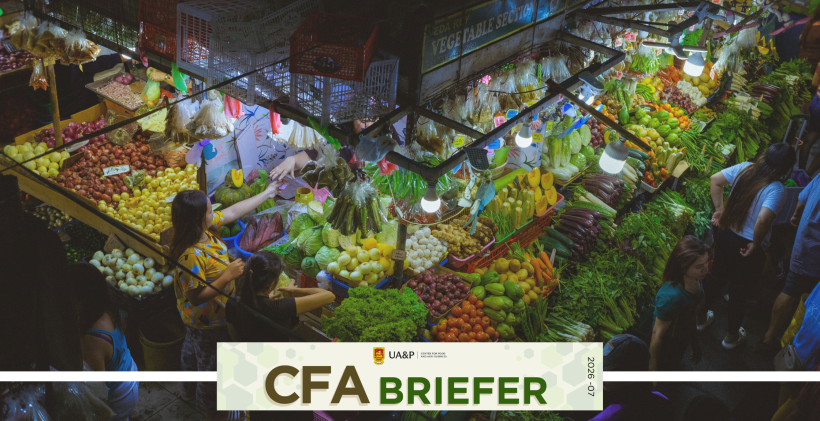
Philippine Agriculture Amidst Global Disruptions: Assessing Performance, Risks, and Opportunities

This article examines the implications of recent global developments for Philippine agriculture, reviews the sector’s performance in 2025, presents the outlook for 2026, and identifies key risks and opportunities. It highlights the need for resilience, innovation, and strategic action to strengthen food security, competitiveness, and sustainable growth in a changing global environment for stakeholders nationwide.

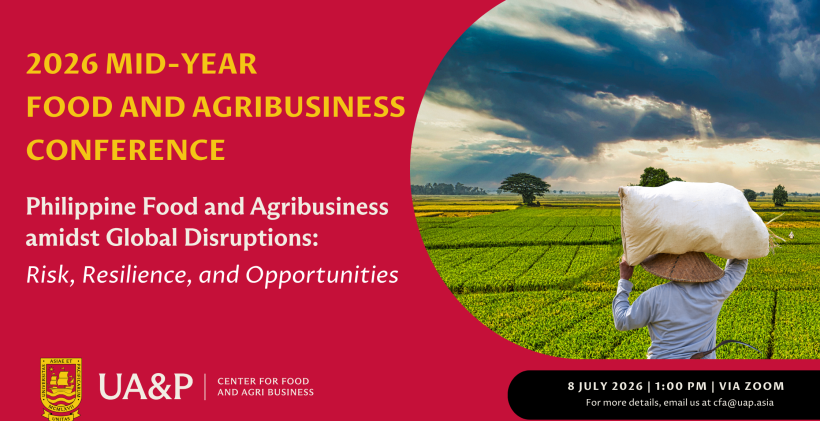
2026 Mid-Year Food and Agribusiness E-Conference

SAVE THE DATE! Join us for the Mid-Year Food and Agribusiness E-Conference 2026 as industry leaders, experts, and stakeholders come together to discuss: “Philippine Food and Agribusiness amidst Global Disruptions: Risks, Resilience, and Opportunities” July 8, 2026 1:00 PM – 5:00 PM Via Zoom Discover insights on navigating global challenges, strengthening resilience, and unlocking new

Balancing Balancing People, Planet, and Profit in Philippine Agriculture: Examples from the Field

This article positions sustainable investment in Philippine agriculture as a critical response to food insecurity and resource pressure. Centering on the Triple Bottom Line, it highlights how organizations can prioritize social equity and environmental protection while remaining economically viable. Through case studies, the article demonstrates sustainable growth that replaces mere output maximization with responsible value.

ASEAN Agricultural Supply Chains

This article examines ASEAN agricultural supply chains, focusing on their role in linking farms, markets, and consumers. It highlights contributions to food security, trade, and rural livelihoods, while noting challenges from climate risks, logistics gaps, and regulations. The discussion emphasizes resilience and sustainability, offering insights on strengthening supply chains for competitiveness and reliable food access.

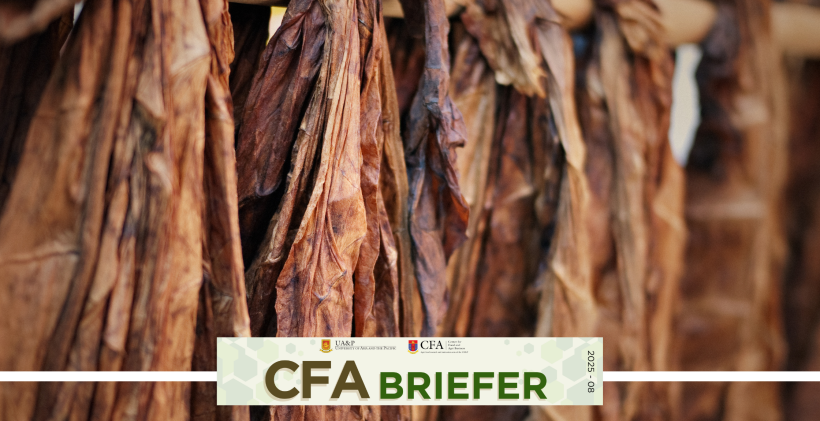
CFA Philippine Tobacco Industry

Philippine tobacco industry’s economic footprint: Contributions, challenges and prospects

This article examines the Philippine tobacco industry’s economic footprint, focusing on its contributions and challenges. It reviews the sector’s role in generating income, employment, and government revenues, while tackling concerns over regulations, illicit trade, and shifting markets. The discussion underscores resilience and competitiveness, offering insights on how the industry can adapt and sustain relevance. by

Agriculture Scenarios 2024-2025

This article will discuss the scenarios for agriculture in 2024 and prospects for 2025, with focus on how to future-proof Philippine food and agribusiness. It will elaborate on innovation, resilience, and sustainable competitiveness – strategic areas that are crucial in addressing mounting challenges such as climate disruptions, rising costs, and evolving consumer preferences. by Marie

CFA Briefer Food for all

Food for all: Current realities, challenges, and prospects of global food security

This article explores global food security, highlighting key challenges and opportunities in food accessibility, sustainability, and resilience. It examines factors affecting production and distribution, addresses pressing issues in food systems, and offers insights into strategies for a more secure and sustainable future. by Marie Annette Dacul, Executive Director, Center for Food and Agri Business, UA&P FOOD

CFA Briefer on ASEAN Agricultural Productivity

An Analysis of ASEAN Agricultural Productivity

by MATTEO GABRIELE CELDRAN, Student Intern from Brown University, Providence, Rhode Island, US and MARIE ANNETTE DACUL, Executive Director, UA&P Center for Food and Agri Business AGRICULTURE OUTPUT in the Association of Southeast Asian Nations (ASEAN) region has grown significantly during the past four decades because of improvements in agricultural productivity. Increases in agricultural productivity

CFA Briefer

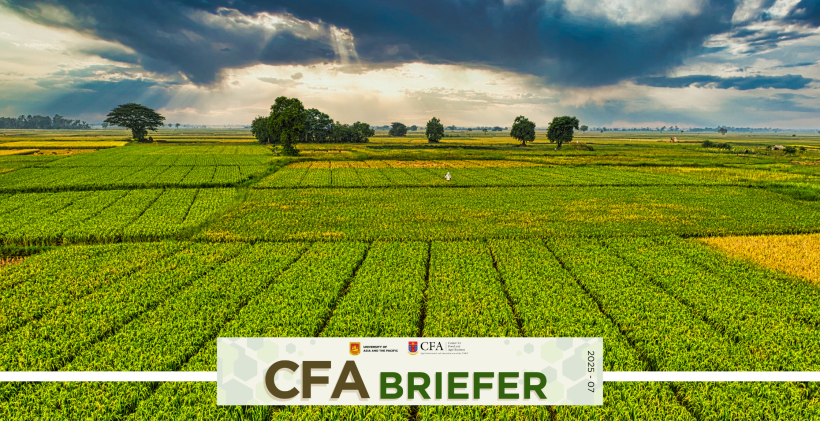
Rice-ing to the challenge

by SENEN U. REYESFormer Executive Director, Center for Food and Agri Business, UA&P OVER THE DECADES, the performance of the rice industry has been a traditional barometer ofthe success or failure of Philippine agriculture in many government administrations. Rice has been dubbed as a political crop and remains to be the single most important crop