This article positions sustainable investment in Philippine agriculture as a critical response to food insecurity and resource pressure. Centering on the Triple Bottom Line, it highlights how organizations can prioritize social equity and environmental protection while remaining economically viable. Through case studies, the article demonstrates sustainable growth that replaces mere output maximization with responsible value.
by Joy Kristel L. Orzales, Senior Agribusiness Specialist, Center for Food and Agri Business, UA&P
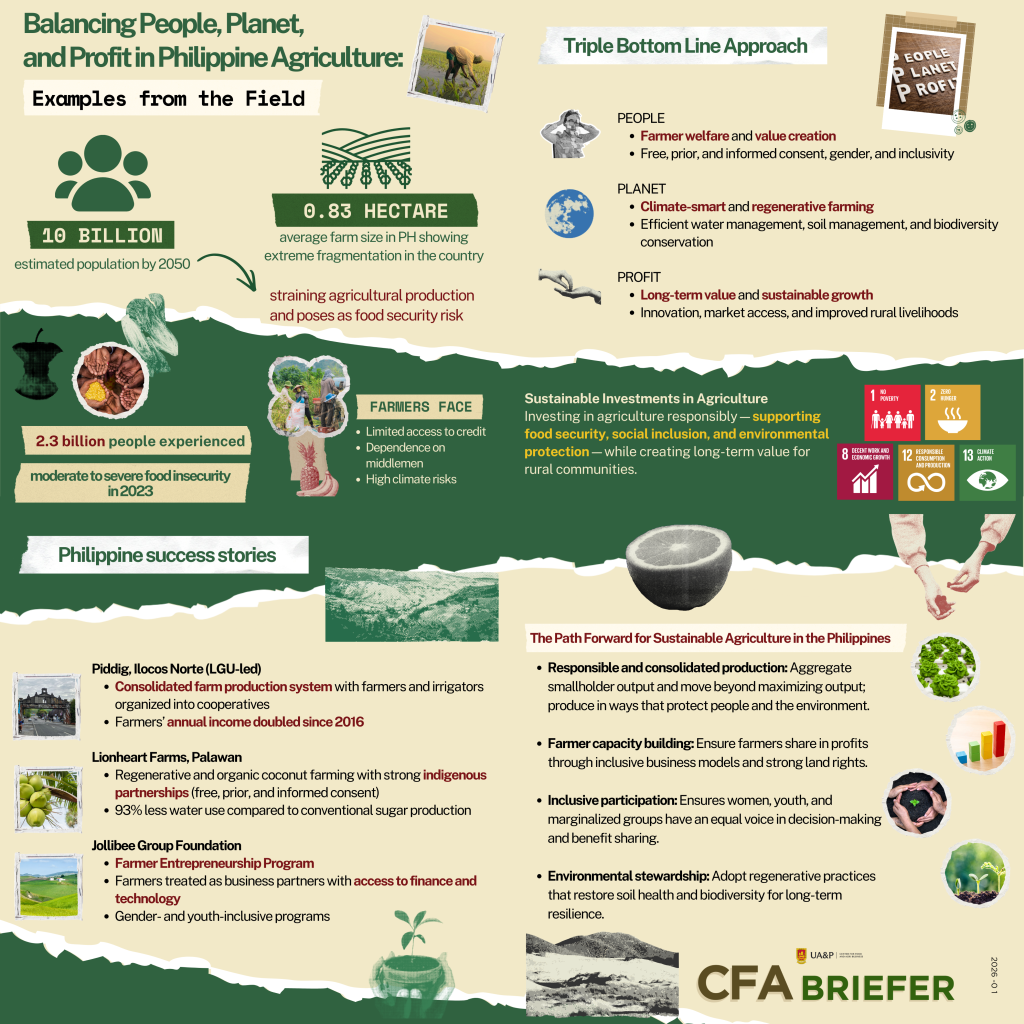
THE GLOBAL FOOD SYSTEM FACES MOUNTING PRESSURE as the world’s population approaches 10 billion by 2050 and diets shift toward more resource-intensive foods such as meat. Rising demand is straining agricultural production systems, many of which already contribute significantly to climate change and environmental degradation. This raises a central challenge: how to produce enough food without harming the planet or undermining rural livelihoods.
Sustainability, framed through the triple bottom line of people, planet, and profit, offers a framework for addressing these intertwined challenges. The urgency of sustainable agricultural investment is clear: in 2023, an estimated 2.3 billion people worldwide experienced moderate to severe food insecurity, about 383 million more than in 2019, highlighting the need for strategic investments that build resilient and sustainable food systems (United Nations, n.d.).
SUSTAINABLE INVESTMENTS IN AGRICULTURE
Sustainable agricultural investments aim to address food insecurity while promoting social inclusion and environmental protection, considering equity, long-term value, and ecological impact alongside financial returns. This approach shifts the priority from merely maximizing output to producing responsibly, directly contributing to several Sustainable Development Goals, including SDG 1 (No Poverty), SDG 2 (Zero Hunger), SDG 8 (Decent Work and Economic Growth), SDG 12 (Responsible Consumption and Production) and SDG 13 (Climate Action).
Do you want to read the full article? Please answer this form and we will send the article to your email address.